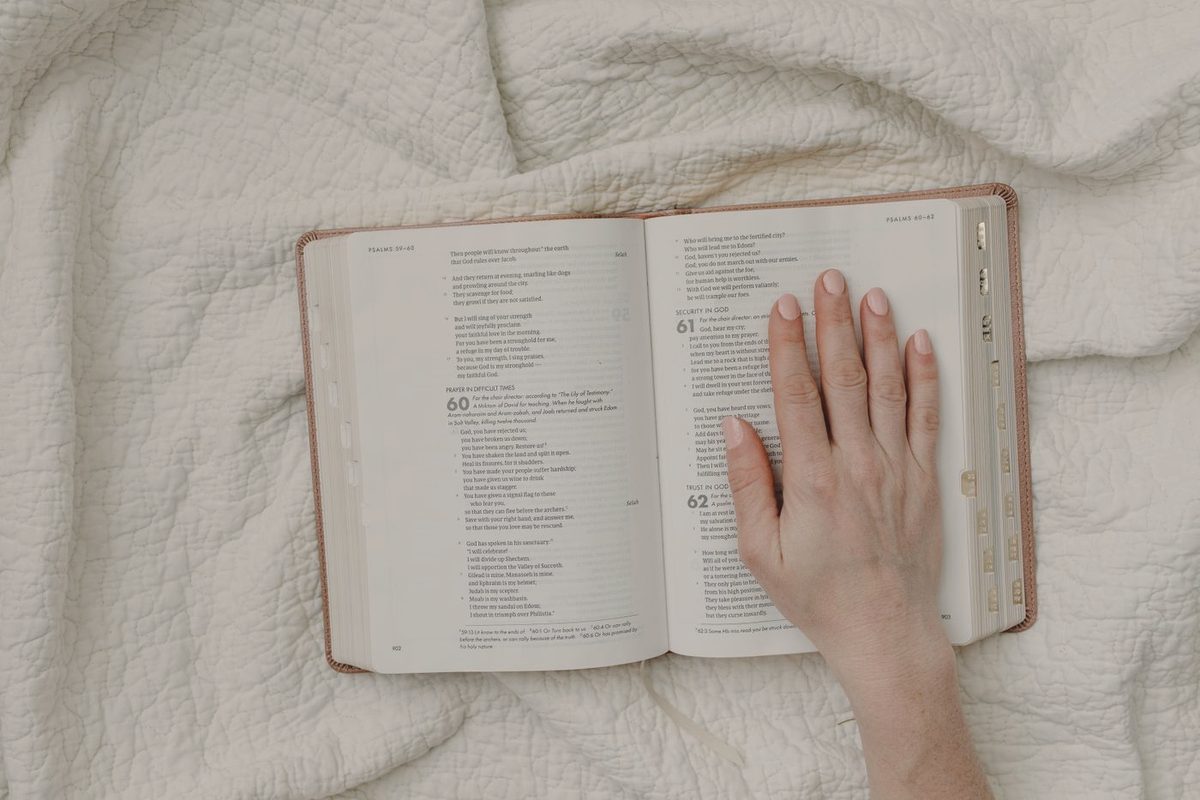
If you are reading this in the dark, with the house quiet and your mind anything but, you are in good company. People have been bringing sleepless, anxious nights to God for thousands of years, and some of the most honest prayers in the Bible were prayed in bed.
The verse that speaks most directly to anxiety at night is Psalm 4:8: In peace I will both lie down and sleep; for you alone, O LORD, make me dwell in safety. Alongside it, Psalm 3:5, Psalm 127:2, Psalm 121:4, and Philippians 4:6–7 are worth keeping close. But these verses are not sleep tips. They are a person telling you who is awake while you rest.
Why worry gets louder after dark
David knew what a bed could feel like when the thoughts would not stop. In Psalm 4 he tells his readers to ponder in your own hearts on your beds, and be silent (Psalm 4:4). The bed is where the day's noise falls away and whatever we have been outrunning finally catches up with us.
The psalm just before it is titled A Psalm of David, when he fled from Absalom his son. Few nights could be lonelier than running from your own child's rebellion. Psalm 3 reads like a morning prayer, and it holds a quiet line many of us skim past: I lay down and slept; I woke again, for the LORD sustained me (Psalm 3:5). Many readers hear Psalm 4 as its evening companion, though its title doesn't say so. Read together, they trace the shape of a hard day held on both ends by God.
That matters, because night anxiety often feels like proof that something is wrong with your faith. David's psalms suggest something gentler. The night is simply where the weight shows, and it is exactly where God meets us.
The safety David found
The word David uses for safety in verse 8 is the Hebrew betach, which belongs to the same family as the word for trust. It is not the safety of a locked door or a problem solved. It is the settledness of someone who knows whose care she is under. Notice where David places it: you alone, O LORD. Not the absence of enemies, not a clear plan for tomorrow, but the Lord Himself.
There is a lovely echo here. In verse 7 David says God has given him more joy than people have when their grain and wine abound. Those same words, safety, alone, grain and wine, cluster together in Moses' last blessing over Israel: So Israel lived in safety, Jacob lived alone, in a land of grain and wine (Deuteronomy 33:28). We can't say for certain that David meant the echo, but the picture still lands. The security God promised to a whole people, David claims for one anxious night in one small room.
Peace at night is not the feeling that everything is fine. It is the decision to lie down because God is still God. You can do that with tears on your face.
Verses to keep by your bed
A few passages are worth writing on a card and leaving on your nightstand. Psalm 127:2 gently names the exhaustion of eating the bread of anxious toil and then says, for he gives to his beloved sleep. Rest is described as a gift, not an achievement you earn by finally getting everything under control.
Psalm 121:4 reminds you that you are not the one keeping watch: Behold, he who keeps Israel will neither slumber nor sleep. You can close your eyes because He never closes His.
When tomorrow is the thing keeping you awake, Jesus' words in Matthew 6:34 are honest and kind: do not be anxious about tomorrow, for tomorrow will be anxious for itself. He doesn't pretend tomorrow will be easy. He simply refuses to let you carry it tonight.
And when the worries are specific, Philippians 4:6–7 gives you somewhere to put them: tell God plainly, with thanksgiving, and His peace will guard your hearts and your minds in Christ Jesus.
When sleep still doesn't come
It would be dishonest to promise that reading a verse will make you fall asleep. Some nights you will pray, and still lie awake. That is not failure, and it does not mean God has stepped away.
Think of the disciples in the storm, waking Jesus with a desperate question: Teacher, do you not care that we are perishing? (Mark 4:38). He did care. He rose and spoke peace to the sea. The same Lord who slept in that boat is the one who stays awake over you now.
Remember, too, that David didn't write Psalm 4 after his troubles were over. He wrote it while people around him were still asking, Who will show us some good? (Psalm 4:6). His peace came from God's face turned toward him, and from a joy deeper than any good harvest (Psalm 4:7). You can pray for that same light in the dark, asking first not for answers, but for Him.
Carrying this into tonight
Tonight, try reading Psalm 4 slowly, all eight verses, and then pray verse 8 back to God in your own words. Name what is keeping you awake. Then tell Him you are going to lie down anyway, because He alone makes you dwell in safety. If you wake at 2 a.m., you don't need a new strategy. Just begin again with that same verse. And if restless nights keep returning, it's good to let a pastor or a trusted Christian counselor help you carry them.
Questions women often ask
What is a good Bible verse to read before bed when I'm anxious?
Psalm 4:8 is one of the best, because it was written for exactly that moment: lying down in peace because the Lord alone makes you dwell in safety. Psalm 3:5, Psalm 127:2, and Psalm 121:4 pair well with it.
Is it wrong to feel anxious at night as a Christian?
No. David wrote honestly about restless nights, and Scripture invites you to bring that anxiety to God rather than feel ashamed of it. Feeling anxious is not proof of weak faith.
What should I pray when I can't sleep?
Keep it simple. Tell God specifically what is on your mind, thank Him for one way He has been faithful, and ask Him to guard your heart and mind in Christ (Philippians 4:6–7). Then rest in the truth that He is awake even when you are not.
Want to go deeper in your Bible? Our recommended Study Bible app is StudyBible.io. It's not meant to replace your Bible, but be right next to it.